Google recently announced what is being called the largest update to its core search interface in over 25 years. Driven by their new Gemini 3.5 Flash model, the update shifts Google from a traditional keyword-lookup system into an AI-first, conversational search engine.
The biggest changes rolled out for users focus on the search experience, agentic capabilities, and interactive results.
1. The “Intelligent Search Box”
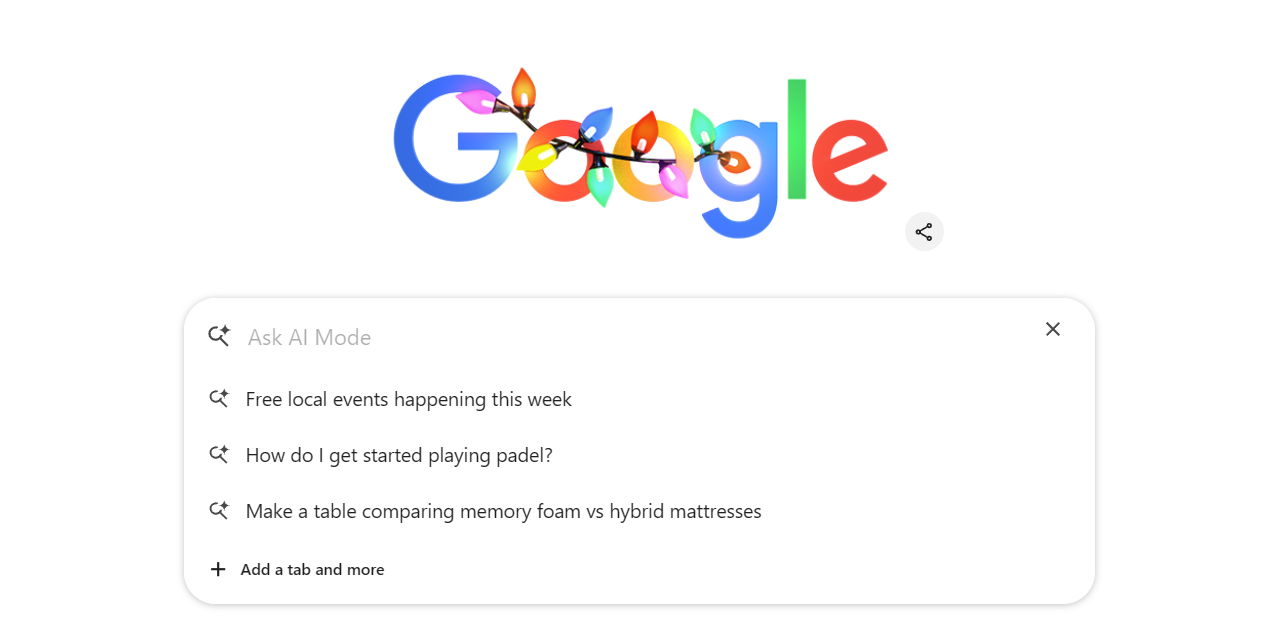
The iconic, static Google search bar has been completely redesigned.
- Multi-Modal & Flexible: The search box now dynamically expands to let you ask long, complex, natural-language questions. Instead of just text, you can input combinations of text, images, video files, PDFs, or even active Chrome tabs to ask multi-layered questions.
- Unified AI Mode: Previously, “AI Overviews” and the conversational “AI Mode” felt like separate experiences. Google has unified them. The search engine automatically retains context from your initial search, allowing you to ask seamless, conversational follow-up questions without restarting your query.
2. “Agentic” Search (Information Agents)
Google is moving beyond just answering queries to performing continuous tasks on your behalf through built-in AI agents.
- 24/7 Monitoring: For Google AI Pro and Ultra subscribers, you can spin up multiple Information Agents to track specific criteria across the web (e.g., scanning real-time apartment listings that meet strict constraints or tracking specific sports or financial updates). The agent monitors the web continuously and alerts you the moment it finds a match.
- Direct Booking & Calling: If you are searching for local services (like booking a late-night restaurant table, a pet care appointment, or home repair), Google can now check live availability, pull pricing, provide direct links to finalize bookings, or even offer to call the business directly to coordinate on your behalf.
3. Generative UI and Interactive “Widgets”
Powered by a backend framework called Google Antigravity, search results are no longer just standard lists of blue links and text paragraphs.
- Dynamic Layouts: If you ask a highly visual or mathematical question, Google generates custom, interactive tools on the fly.
- Custom Sandboxes: For example, searching a physics or engineering concept will surface an interactive visual widget where you can slide parameters (like adjusting mass or velocity) to see real-time updates and data visualizations tailored uniquely to your query.
4. The Universal Cart
Shopping through Google has been streamlined across multiple platforms with a unified checkout experience.
- Cross-Platform Syncing: If you are researching products on Google Search or watching a review on YouTube, you can drop items into a single Universal Cart.
- Compatibility & Deal Checking: The underlying AI automatically monitors the items in your cart for price drops or restock alerts. It can even analyze technical components for compatibility (e.g., verifying if a specific motherboard and processor you added from two different retailers will actually work together) before you purchase.
5. Creator and Publisher “Search Profiles”
To give content creators and publishers more control over how they appear amid these AI updates, Google introduced Search Profiles.
- This provides a dedicated, shareable space directly accessible through Discover or Knowledge Panels where trusted creators can showcase their latest articles, social posts, and videos, making it easier for users to directly “follow” their preferred primary sources.
Google’s new AI Mode changes how local SEO works by focusing less on blue links and more on which local businesses the AI trusts enough to recommend directly in its answers. It cares a lot about clear facts, consistent information, and real-world proof that a business is active and reliable.
What AI Mode Is Doing
AI Mode shows a conversational answer at the top of Google, often replacing the normal local “3-pack” with AI-built business cards pulled from Google Business Profiles (GBPs).
When AI Overviews appear and your business is not cited, click-through rate can drop by as much as 61%, so being cited in AI Mode is now more important than ranking in position 1.
Why Entity Authority Matters
Instead of just counting links, Google’s AI builds a picture of each business (an “entity”) using information from many places: your site, GBP, directories, reviews, and social media.
The more consistent, detailed, and trustworthy those facts are everywhere online, the more likely AI is to pick and highlight your business in its answers.
Key Actions For Your Google Business Profile
Choose a very accurate primary category and only a few truly relevant secondary categories so Google clearly understands what you specialize in.
Match your services, hours, and attributes (like parking, payment types, amenities) exactly with your website and keep them updated, especially when your business is open or closed.
Stay active: respond to reviews and questions, post photos and offers, and treat GBP as a live, always-up-to-date data feed, not a static listing.
Technical Setup And Consistency
Add LocalBusiness and Service schema (in JSON-LD) with precise details like services, offers, and exact geo coordinates so AI can read and trust your data.
Use clear images with descriptive filenames and alt text that match your services to qualify for richer AI results.
Make sure your name, address, phone, and service details are identical across your website, GBP, and big directories like Yelp and Tripadvisor to avoid confusing the AI.
Reviews, Content, And Brand Mentions
Encourage customers to mention specific positives (“fast service,” “friendly staff,” “clean rooms”) in reviews so AI can turn those into attractive summary phrases.
Use Review and AggregateRating schema and reply quickly to both good and bad reviews to build trust under the E-E-A-T framework (Experience, Expertise, Authoritativeness, Trustworthiness).
Write “answer-first” content that clearly answers main questions plus follow-up questions people might ask next, and structure it with headings, FAQs, and lists so AI can easily pull and cite it.
Focus more on getting your brand mentioned (linked or not) in local news, blogs, forums, and on social and YouTube, because those mentions strongly support visibility in AI Mode.
Conversions And Accessibility
Expect less overall organic traffic but more serious, “ready to act” visitors from AI Mode, so prioritize conversion rate optimization over raw traffic.
Make it super easy for visitors to take action with clear above-the-fold calls to action, short forms, and simple paths to “Book now,” “Call,” or “Get a quote.”
Keep important facts (licenses, services, locations, key details) in plain HTML, not hidden in tabs or scripts, so AI can easily read and use them.
If you want help getting your local business ready for Google’s AI Mode—optimizing your GBP, fixing schema, cleaning up citations, and boosting conversions—reach out for free consulting. Send your website URL, main location, and top 3 services, and you’ll get a custom mini-audit and action plan at no cost.